
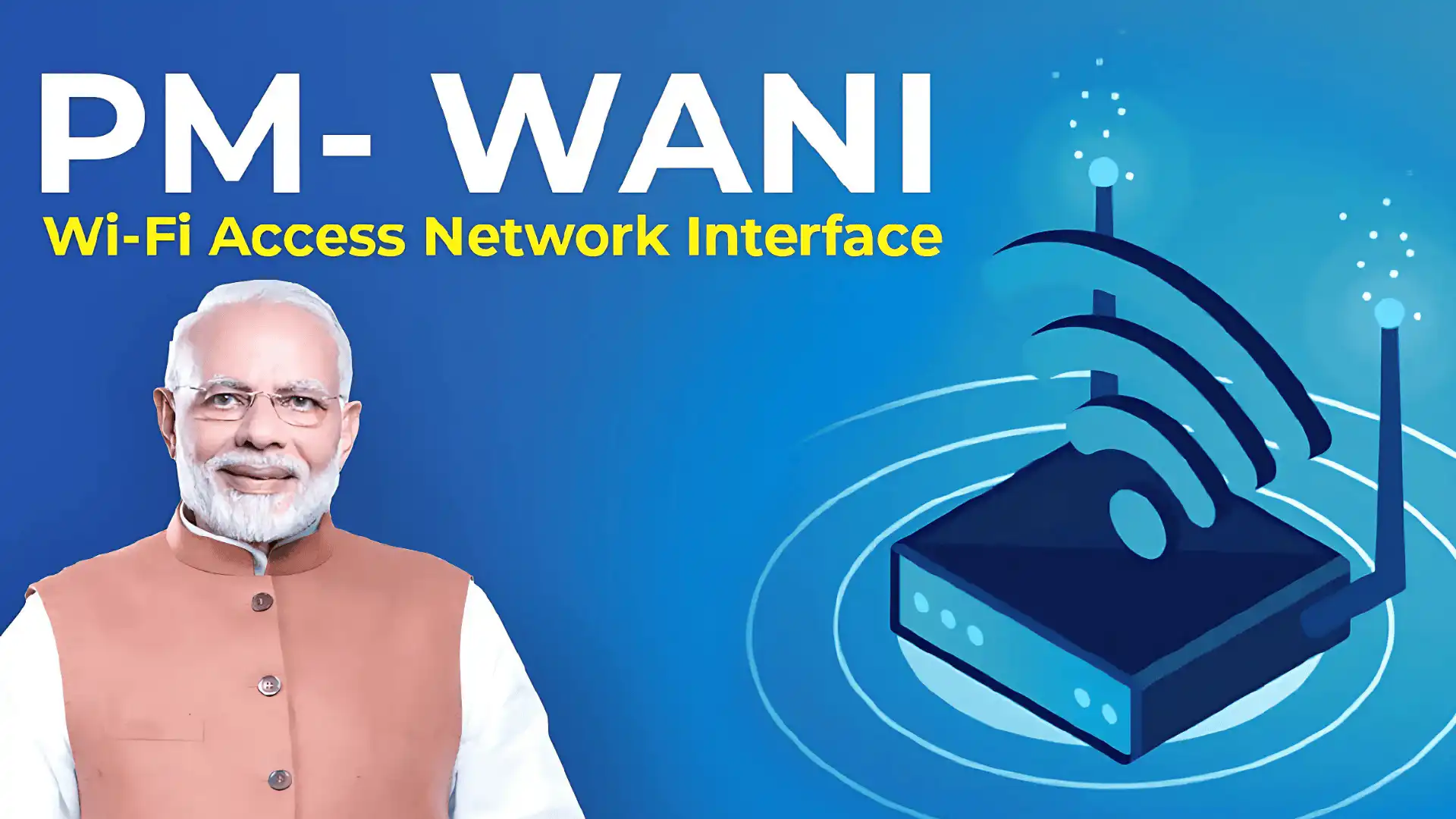
The PM-WANI scheme, also known as the Prime Minister’s Wi-Fi Access Network Interface, aims to make the internet accessible and affordable across India.
It creates a vast public Wi-Fi network by establishing a decentralized system.
The framework comprises four parts: Public Data Offices (PDOs) that set up Wi-Fi hotspots, PDO Aggregators (PDOAs) that manage hotspots, App Providers that offer mobile apps, and a Central Registry that oversees the system.
This initiative supports the Digital India mission by empowering small businesses and citizens through easy, low-cost internet access.
Anyone can get involved by becoming a PDO and setting up a Wi-Fi hotspot in their locality.
What Exactly is PM-WANI?
The PM-WANI scheme, also known as the Prime Minister’s Wi-Fi Access Network Interface, was approved by the Union Cabinet in December 2020.
Its main objective is to significantly increase the number of public Wi-Fi hotspots across India, thereby improving digital communication, particularly in rural and underserved areas.
The big idea is a decentralized and “unbundled” approach, which means different parts of the network are handled by different players.
This makes it easier and cheaper for various individuals and small businesses to participate, eliminating the need for complex licenses or fees.
This system aims to create a widespread, accessible, and affordable internet infrastructure for everyone.
The Four Pillars of the PM-WANI Framework
The PM-WANI framework operates through four key components that work together to create a flawless public Wi-Fi network across India.
These pillars ensure that setting up and accessing public Wi-Fi is simple, affordable, and widely available to everyone.
1. Public Data Office (PDO): The Local Entrepreneur
A PDO is any individual or business that sets up and operates Wi-Fi hotspots for public use.
This can be your local tea stall owner, shopkeeper, or any small business owner who wants to provide internet access to customers.
PDOs require no license, registration, or fees from the Department of Telecommunications, making them a straightforward process to start. They act as the final connection point between users and the internet, bringing connectivity to local communities.
2. Public Data Office Aggregator (PDOA): The Connector
A PDOA acts as the central coordinator that connects multiple PDOs within a single network system.
They provide essential backend services, including user authentication, billing management, and accounting services, to all the PDOs in their network.
PDOAs handle technical and administrative tasks, enabling PDO operators to focus on their core business. They simply need to complete a brief online registration to begin managing PDO networks.
3. App Provider: The User Gateway
App Providers develop mobile applications that make it easy for users to find and connect to PM-WANI hotspots.
Through these apps, users can discover nearby Wi-Fi hotspots, create their accounts, and make digital payments for internet access.
The app serves as the primary interface between users and the PM-WANI network, making it simple to find and pay for public Wi-Fi. Users download the app, find nearby hotspots, and connect quickly.
4. Central Registry: The Ecosystem Hub
The Central Registry is the central database that maintains records of all App Providers, PDOAs, and PDOs in the PM-WANI ecosystem.
Currently managed by the Centre for Development of Telematics (C-DoT), it ensures that all components of the network operate smoothly and securely.
The registry oversees the ecosystem, enforces security standards, and ensures registered entities follow guidelines. It serves as the backbone of the PM-WANI framework, keeping it organized and operational.
How to Get Involved: Official Guidelines for Stakeholders
Participating in the PM-WANI ecosystem is designed to be straightforward and accessible for a wide range of participants.
The government has created clear pathways for entrepreneurs, businesses, and tech companies to join and contribute to India’s public Wi-Fi network.
1. For the Entrepreneur (Becoming a PDO)
Becoming a PDO is the simplest way to enter the PM-WANI ecosystem – you just need to set up a Wi-Fi access point at your location and partner with any registered PDOA who will handle the technical backend.
The major advantage is that you don’t need a government license, pay any fees to telecom authorities, and can start earning additional income from your existing business premises.
PDOs typically receive a significant portion of the revenue generated from users who access Wi-Fi through their hotspots, creating a new income stream alongside their primary business.
2. For Aggregators and App Providers (PDOA and App Provider)
Companies seeking to become PDOAs or App Providers must first register through the official SARALSANCHAR portal, which is maintained by the Department of Telecommunications.
After completing the portal registration, they need to sign up with the Central Registry to become officially recognized in the PM-WANI ecosystem.
Registration requires documents like a company certificate, board resolution, and compliance paperwork to ensure legitimacy. The process is streamlined to be completed within 7 days, enabling businesses to start operations, build their PDO network, or launch applications quickly.
Benefits and Impact of the PM-WANI Scheme
The PM-WANI scheme has a significant positive impact across multiple levels of society. From individual citizens to the entire nation, this initiative drives digital transformation and economic growth.
For Citizens
- Affordable internet access – Low-cost Wi-Fi connectivity for everyone, especially economically weaker sections
- Bridge the digital divide – Equal internet opportunities for urban poor and rural populations
- Improved quality of life – Better access to online services, education, and healthcare information
- No complex procedures – Simple registration and payment process through mobile apps
- Wide availability – Internet access at local shops, tea stalls, and public spaces
For Small Businesses
- New revenue stream – Additional income without investment in licenses or infrastructure setup
- Customer attraction – Free Wi-Fi draws more customers to shops and establishments
- Competitive advantage – Stand out from competitors by offering internet connectivity services
- Easy implementation – Simple setup process with no government approvals or complex paperwork
- Flexible operations – Control over pricing and service hours based on business needs
For the Nation
- Economic growth – Increased digital participation leads to higher GDP and business opportunities
- Digital empowerment – More citizens gain access to digital services and online platforms
- Policy achievement – Fulfills National Digital Communications Policy 2018 connectivity goals and targets
- Innovation boost – Encourages development of new digital services and mobile applications
- Infrastructure development – Creates a nationwide Wi-Fi network without heavy government investment
The PM-WANI scheme represents a comprehensive approach to digital inclusion that benefits all stakeholders.
By making internet access affordable and widely available, it accelerates India’s path toward becoming a digitally empowered society.
Conclusion
The PM-WANI scheme represents a revolutionary step toward universal digital connectivity in India.
By creating a decentralized public Wi-Fi framework, it enables small businesses to become internet providers, generating new income streams and boosting local economies.
The scheme’s simple, license-free model empowers citizens and strengthens the Digital India mission by bridging the urban-rural divide.
With its focus on affordability and accessibility, PM-WANI is poised to transform India into a digitally empowered society, improving the quality of life and fostering innovation nationwide.